Top 10 Platforms for Dropshipping Businesses Online
Photo by hookle.app on Unsplash
The global dropshipping business is on the rise. It is valued at approximately $583-590 billion dollars in 2026, and it is expected to surpass $2 trillion by the early 2030s. Due to the rise of AI automation (inventory setup, forecasting, chatbots, dynamic pricing), it is now way more easy to launch a store for small business owners and entrepreneurs. In this blog, we review the top ten dropshipping platforms for anyone looking to launch an online store this year.
What is Dropshipping?
Unlike traditional e-commerce, where you need a large budget to purchase and store inventory, dropshipping requires much less upfront investment. You mainly need to invest in setting up your online store, marketing, and other basic business costs. To make the process easier, several platforms now offer tools that help you build your store, find products, connect with suppliers, and manage orders from one place.
How We Evaluated Each Platform
Here is how we have evaluated each platform to give you the best solution:
- Value for money: The actual value of the product or service, including fees and usual additional costs.
- Dropshipping supplier access: How many good suppliers or print-on-demand apps actually have access to dropshipping suppliers?
- Ease of use: How much technical skill is required to set up and operate.
- Automation & tools: What percentage of product importing, stock syncing, and order handling is automated, including AI.
- Scalability: Whether it can scale with you or reaches a limit.
Official pricing pages and the latest sources were used as the basis for our calculations, as some of these platforms adjusted their pricing throughout 2026.
Quick Comparison of of Top 10 Dropshipping Platforms
| Platform | Starting Price | Transaction Fees | Best For |
| Shopify | $39/month | 2.9%+30¢ (or +2% without Shopify Payments) | Widest supplier ecosystem |
| WooCommerce | Free plugin + ~$25–350/month hosting | None from platform | Full ownership and customization |
| BigCommerce | $39/month | Up to 2% without an approved processor | Built-in features, less reliance on apps |
| Wix | $29/month | None from Wix | Easiest drag-and-drop setup |
| Squarespace | $29/month for Core plan | 0% on physical products (Core+) | Design-led, brand-first stores |
| Square Online | Free and paid starting at $29 to 49/month | 2.9%+30¢ (free), less on Plus | Sellers who also sell in person |
| OpenCart | Free + hosting | None from OpenCart | Full technical control, self-hosted |
| Amazon Seller Central | $0.99/item or $39.99/month | 8–15% referral fee | Built-in marketplace traffic |
| Shift4Shop | $0 to $41/month | None from Shift4Shop | US sellers wanting a free option |
| Big Cartel | Starts at $15 to $30/month | None | Small, curated catalogs |
10 of the Best Dropshipping Platforms For Online Businesses
Here are the best dropshipping platforms you should consider for your online business:
1. Shopify
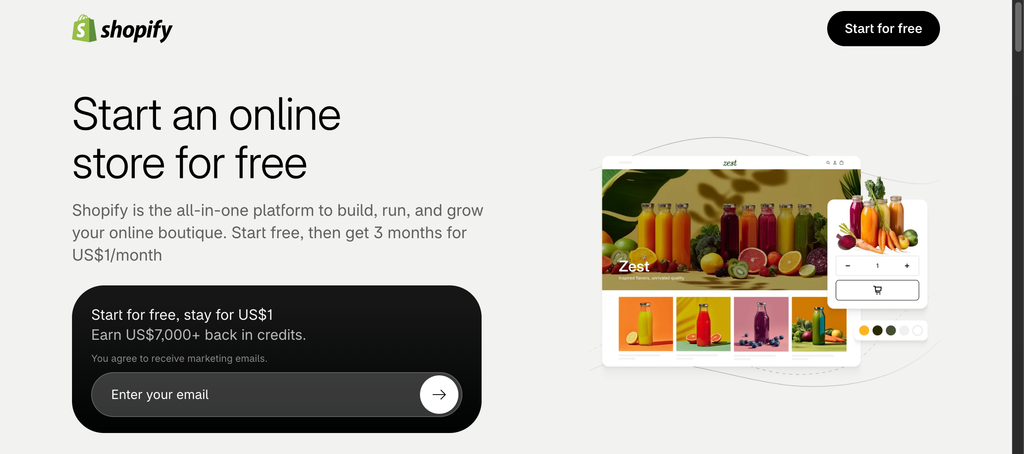
Shopify is a fully hosted e-commerce platform designed to make launching an online store simple. You don’t need to manage hosting, security, or servers, and its large app ecosystem gives dropshippers access to numerous suppliers and automation tools.
- Price: Starts at $39/month for the Basic plan, or $29/month when billed annually.
- Fees: Shopify Payments charges standard payment-processing fees; using a third-party payment provider can add a 2% transaction fee on the Basic plan.
- Supplier apps: Offers thousands of apps, including popular dropshipping options such as DSers, Spocket, Zendrop, and AutoDS.
Pros
- User-friendly: no coding needed, intuitive even for total beginners
- Huge supplier ecosystem: connects to DSers, Spocket, Zendrop, and AutoDS
- Reliable built-ins: Reliable hosting, SSL, and abandoned cart recovery included
- Strong support: 24/7 across chat and phone
Cons
- Extra fees: a 2% surcharge applies if you skip Shopify Payments
- Costs add up: apps and premium themes push the real monthly cost higher
2. WooCommerce
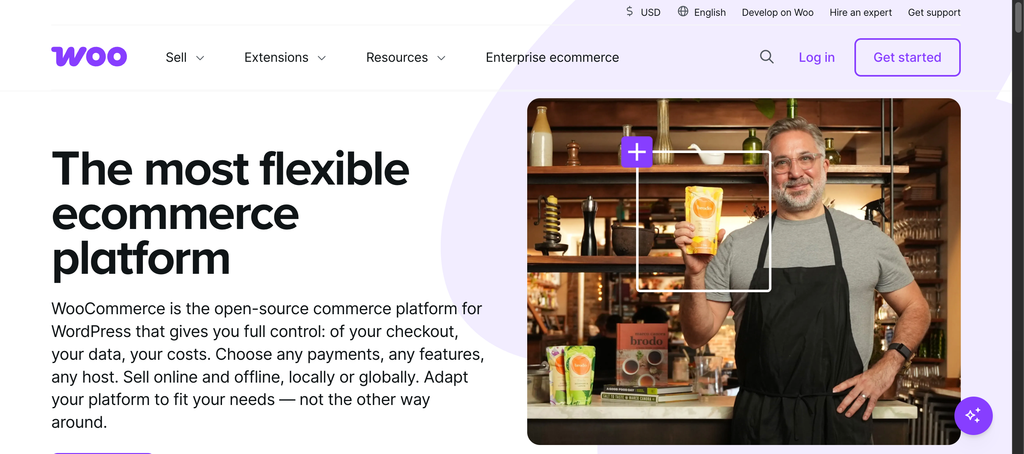
WooCommerce is a free plugin that transforms any WordPress site into an online store. It’s open-source, so you have full control over the appearance, functionality, and construction of your store, including the code. Dropshipping is done via plugins that link to suppliers, but you’ll have to handle your own hosting.
- Price: The plugin is free, but you pay separately for hosting, which can vary widely depending on the provider and plan.
- Fees: WooCommerce does not charge its own transaction fees; you only pay the fees charged by your chosen payment provider.
- Supplier apps: Supports dropshipping tools such as AliDropship, DSers, Spocket, and WooDropship.
Pros
- No platform transaction fees, ever
- Full ownership of your code, design, and customer data
- A huge plugin ecosystem covers almost any dropshipping need
Cons
- You’re responsible for hosting, security, and updates
- No official support team; you can seek help comes from community forums
- Needs more technical comfort than fully hosted platforms
Best for: technically comfortable sellers who want full ownership and the lowest fees as they grow their store.
3. BigCommerce
BigCommerce is a hosted e-commerce platform that includes many features directly in its plans instead of relying entirely on third-party apps. This reduces the amount of time and money that needs to be invested in typical ecommerce requirements such as SEO and multi-channel sales.
- Price: Starts at $39/month for the Core plan, or $29/month when billed annually.
- Fees: Orders processed through Open Payment Providers can incur an additional fee of up to 2%, depending on your plan; approved Embedded Payment Providers avoid this fee.
- Supplier apps: Its app marketplace includes more than 1,000 apps, with options such as Spocket, DSers, Printful, Modalyst, and Syncee.
Pros
- Strong built-in features mean fewer paid apps needed
- Zero fee at all if you use an approved payment gateway
- Scales well as revenue grows
Cons
- “Zero transaction fees” isn’t true anymore for every setup, since June 2026
- Revenue thresholds can force an earlier plan upgrade than you’d expect
- Fewer dedicated dropshipping apps than Shopify’s 460+
Best for: growing stores that want strong built-in features and are fine using an approved payment gateway.
4. Wix
Wix is a website builder that has evolved into a decent ecommerce platform. It’s designed for those who want to create a store without editing any code, as it allows users to do everything via drag and drop feature. They are also have other services like registering your domain and hosting to easily get started.
- Price: Ecommerce plans start at around $29/month for the Core plan when billed annually, with higher plans available for larger businesses.
- Fees: Wix does not charge an additional platform transaction fee, although standard payment-processing fees still apply.
- Supplier apps: Supports dropshipping services including Modalyst, Zendrop, DSers, and Syncee.
Pros
- No coding needed to launch a polished-looking store
- No platform fee on top of payment processing
- One-click access to Modalyst’s 100M+ product catalog
Cons
- 29 dropshipping apps is a fraction of Shopify’s selection
- Not built for very high-volume, fast-moving catalogs
- Switching templates later usually means rebuilding the site
Best for: first-time sellers who want an easy, visual setup with no technical work.
5. Squarespace
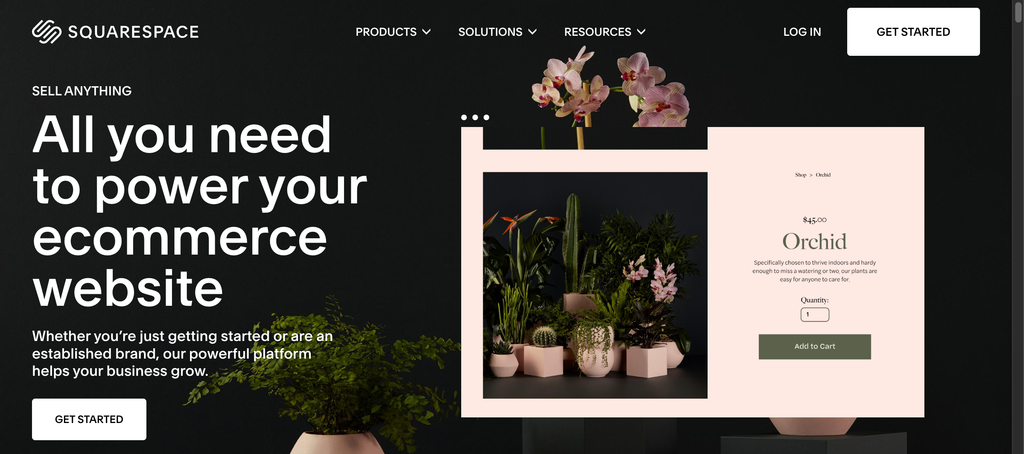
Squarespace is known for its design-focused templates and is a good option for sellers who want a polished, brand-focused storefront. It supports several dropshipping and print-on-demand services.
- Price: Starts at $25/month for the Basic plan, with higher plans available for businesses that need additional features.
- Fees: Ecommerce transaction fees depend on the plan; Core and higher plans do not charge a Squarespace transaction fee on physical products.
- Supplier apps: Supports around 10 dropshipping and print-on-demand services, including Spocket, Printful, Printify, and Syncee.
Pros
- Genuinely attractive templates with little design effort
- Zero Squarespace fee on physical sales from Core up
- Strong built-in content and email marketing tools
Cons
- Only about 10 dropshipping apps — the thinnest list here
- No direct DSers connection, so AliExpress sourcing takes extra steps
- Order automation is basic compared to dedicated ecommerce platforms
Best for: sellers who care more about how the store looks than catalog size or automation.
6. Square Online
Square Online is particularly useful for businesses that sell both online and in physical locations. Its biggest advantage is the ability to synchronize online sales with Square’s point-of-sale system.
- Price: A free plan is available, while paid plans currently start at $49/month for Plus and $149/month for Premium.
- Fees: Online payment-processing fees vary by plan, with the Free plan carrying a higher processing rate than the paid plans.
- Supplier apps: Dropshipping options are more limited, with Spocket being the main dedicated dropshipping integration.
Pros
- A genuinely usable free plan with unlimited listings
- Online and in-person inventory sync automatically
- Very simple to set up
Cons
- The Free plan’s 3.3% online rate is one of the higher ones on this list
- Spocket is basically the only dedicated dropshipping option
- Not built for scaling a high-volume, online-only dropshipping business
Best for: sellers who also sell in person and want one connected inventory.
7. Amazon Central Seller
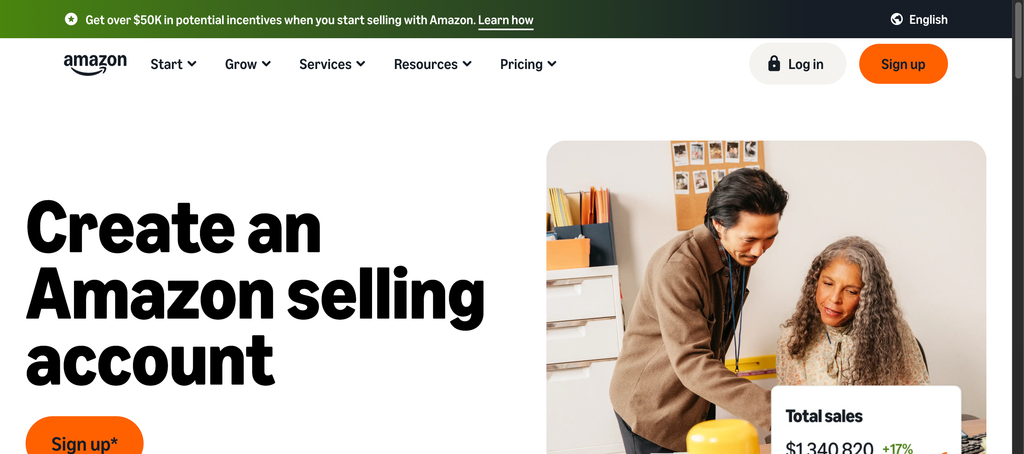
Businesses can sell their products on Amazon’s platform through Amazon Seller Central. Instead of building your own website, you can use Amazon’s existing customer base and traffic to sell products.
- Price: The Individual plan costs $0.99 per item sold, while the Professional plan costs $39.99/month and includes additional selling tools.
- Fees: Amazon charges referral fees that usually range between 8% and 15%, depending on the product category, along with other possible selling costs.
- Supplier apps: Amazon does not provide built-in supplier apps. Sellers need to manage their own supplier relationships and ensure products meet Amazon’s dropshipping requirements.
Pros
- Access to millions of existing customers without building your own traffic
- No need to create or maintain a separate ecommerce website
- Professional selling tools help manage larger product catalogs and advertising
Cons
- Competition is very high, and you need to work extra hard to stand out
- Amazon has very strict policies, and violating them can result in account suspension
- Profit margins are very low
Best for: Sellers who want to take advantage of Amazon’s existing marketplace traffic and are comfortable following strict platform rules.
8. OpenCart
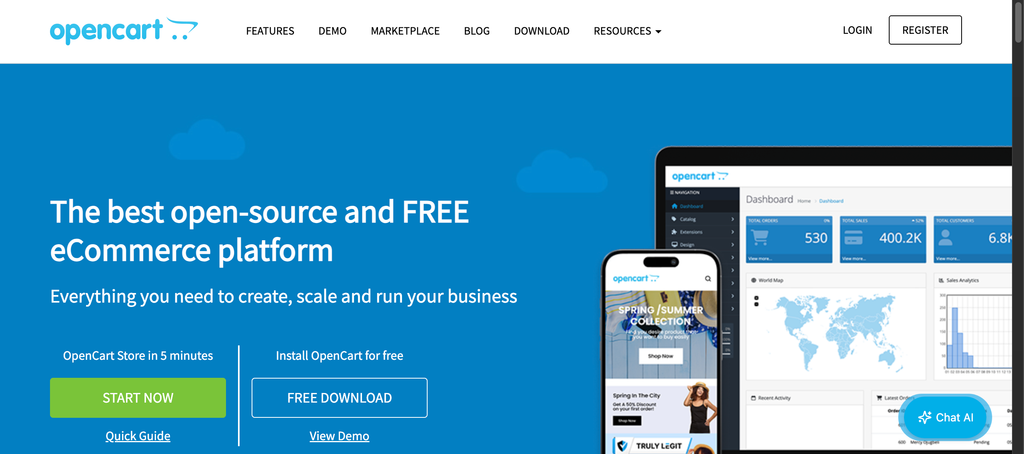
OpenCart is another open source e-commerce platform that allows you to build and manage an online store. It is similar to WooCommerce, as you have full control over your store, which includes hosting, website design, and other features without having to spend any extra money.
- Price: The OpenCart platform is free with no monthly subscription or licensing fees. You will need to pay separately for hosting, which typically starts around $5-30/month.
- Fees: OpenCart does not charge any transaction fees. You only pay the standard processing fees charged by your payment gateway
- Supplier apps: You have access to more than 13000 apps and extensions for managing inventory, product synchronization, order processing and supplier access.
Pros
- Free to use with no monthly platform subscription
- Provides complete control over store design, data, and functionality
- Supports multiple stores, languages, and currencies
- Large extension marketplace for adding ecommerce features
Cons
- Requires more technical knowledge compared to hosted platforms like Shopify
- Store setup, security, updates, and maintenance are your responsibility
- Premium themes and extensions can add extra costs (some of these can cost $29/month)
Best for: Sellers who want full ownership of their store and have technical knowledge on how to setup and manage everything
9. Shift4Shop
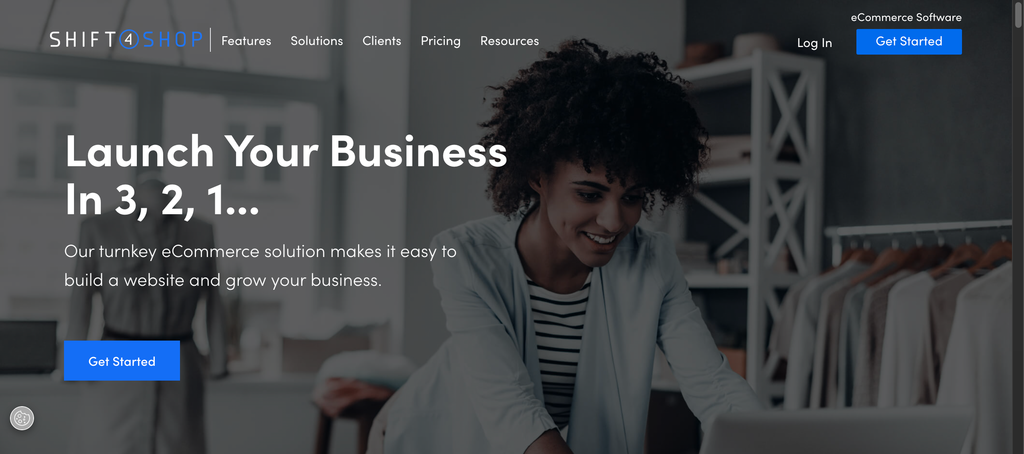
Shift4Shop offers something unique that is not found in many of these platforms: a free plan, but with conditions. You must have a base in the US, be using Shift4’s payment processing and have a minimum of $500 in monthly sales to qualify. If not, it operates just like a regular paid platform.
- Price: The current standard plan is $41/month; older references to a $0/month plan or different tiered pricing may be outdated.
- Fees: Shift4Shop does not charge additional platform transaction fees beyond the standard fees from your payment provider.
- Supplier apps: Offers 700+ apps, including AliDropship, along with built-in dropshipping and fulfillment tools.
Pros
- One simple, flat price — no tier confusion
- A built-in dropshipping/fulfillment feature, not just third-party apps
- Unlimited products at this one price
Cons
- The well-known “free plan” isn’t how it’s sold anymore
- Interface feels older next to newer platforms
- Fewer dropshipping apps than Shopify or BigCommerce
Best for: sellers who want simple, predictable pricing without comparing tiers.
10. Big Cartel
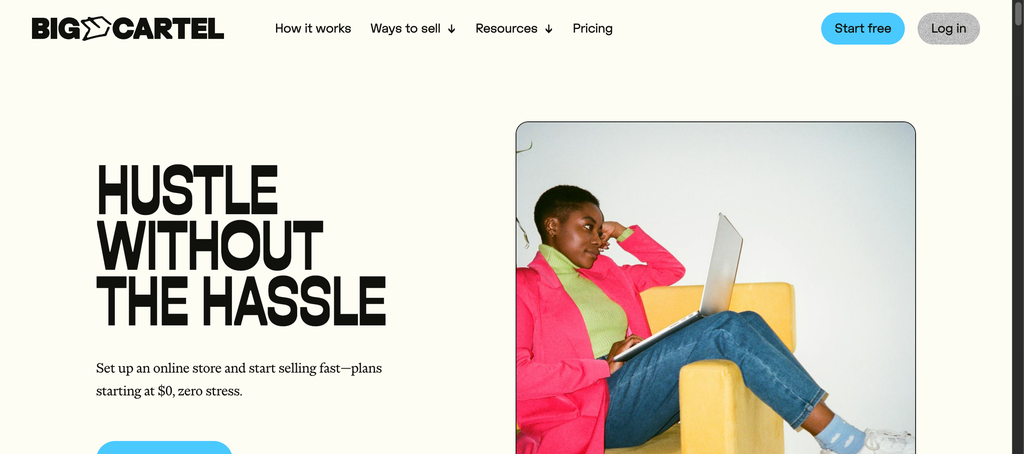
Big Cartel is a very simple platform, and it’s one of the few platforms here that offers a free plan with no transaction fees whatsoever. It was created for independent artists who sell a few products, not for big or rapidly changing dropshipping catalogs. The first thing to consider before investing is its product capacity.
- Price: Offers a limited free plan, while paid plans currently start at $15/month and go up to $30/month.
- Fees: Big Cartel does not charge its own transaction fees; payment-processing fees from providers such as Stripe or PayPal still apply.
- Supplier apps: Primarily supports print-on-demand services such as Printful and Printify rather than a broad range of general dropshipping suppliers.
Pros
- Genuinely free to start, with no transaction fees at any tier
- Simple and easy setup
- Direct support for both major print-on-demand suppliers
Cons
- A hard cap around 300 products, even on the top plan
- No bulk import or order automation tools
- No general dropshipping apps beyond print-on-demand
Best for: small, curated print-on-demand or handmade catalogs, not high-volume dropshipping.
Shopify vs WooCommerce
Shopify and WooCommerce are by far the most popular choices for dropshippers compared to other platforms. However, they both offer different experiences, and choosing between them comes down to personal preferences.
Shopify costs more, but it handles everything for you, which includes hosting, payment gateways, security updates, and site maintenance. This is ideal for beginners who want an easy way to set up their store and have access to a large marketplace of dropshipping apps and tools.
WooCommerce, on the other hand, is a self-hosted WordPress platform that gives you more control over customization, design, and store functionality, and it is free. To run an online business here, you need to have technical knowledge of building a site using custom design, plus managing the hosting, updates, and maintenance yourself.
Ultimately, your choice comes down to whether you prefer simplicity or want to have more control over your business.
| Feature | Shopify | WooCommerce |
| Platform Type | Hosted ecommerce platform | Open-source WordPress plugin |
| Pricing | Starts at $39/month ($29/month annually) | Free plugin + hosting costs |
| Ease of Use | Beginner-friendly with no technical maintenance | Requires more technical setup and management |
| Customization | High through themes and apps | Very high with full control over code and plugins |
| Automation | Available through built-in apps and tools | Available through plugins and extensions which can cost extra sometimes |
| Payment Options | Shopify Payments plus hundreds of third-party payment providers | Supports many payment gateways through WooCommerce extensions |
| Dropshipping Support | Extensive apps including DSers, Spocket, Zendrop, and AutoDS | Strong support through plugins like DSers, Spocket, AliDropship, and WooDropship |
What to Consider Before Signing Up
When selecting a dropshipping platform, you should take into account more than just the monthly subscription fee. Our list have been curated based on:
- Supplier integrations,
- Payment methods,
- Transaction fees,
- Automation capabilities,
- Product limits, and
- Expenses of operating your store.
If you require several paid apps or extensions, a platform with a lower monthly fee can add up to be costly.
Consider your technical abilities and career development goals as well. Newbies might want to use platforms that are easy to set up and have the tools they need, while experienced sellers will prefer to use platforms that are more customizable and flexible. Selecting a platform that will be able to support your long-term goals can save you time and money in the long run.
Recommendations
For those who are new to e-commerce or prefer a hassle-free experience, Shopify and Wix are recommended, offering a variety of dropshipping features alongside robust performance and security. Platforms like Wix and Squarespace are easier for beginners who want a simple and attractive store.
On the other hand, WooCommerce is more appropriate for those who wish to have more control and customization.
BigCommerce is another highly recommended platform for dropshipping businesses that are expanding.
We hope, with this list, we’ve helped you narrow down the choices for choosing the right dropshipping platform that fits your budget, experience, product range, and business goals.
Frequently Asked Questions (FAQs)
- How long does it take to set up a dropshipping store?
Most modern dropshipping platforms allow you to create a basic store within a few hours. However, selecting products, testing suppliers, designing pages, and preparing marketing usually takes much longer.
- Do I need coding skills to start a dropshipping business?
No. Platforms like Shopify, Wix, and BigCommerce allow beginners to create stores without coding. However, basic technical knowledge can help when customizing your store or solving issues.
- How do I know if a product is good for dropshipping?
A good dropshipping product usually solves a problem, has consistent demand, reasonable competition, and enough profit margin after supplier, shipping, and advertising costs.
- Should I test multiple products before building a full brand?
Yes. Many sellers test different products and marketing approaches first before investing heavily in branding, packaging, or scaling a single product line.
- How important are product reviews for a dropshipping store?
Product reviews help build trust, especially for new stores. Customers are more likely to purchase when they can see feedback from other buyers.